 The Games are over for another four years. As everyone heads home, it is
time for counting the costs and thinking of what might have been. One
thing is clear: the price tag of $4.6 billion may not have been a bargain for
Brazil’s underclass.
The Games are over for another four years. As everyone heads home, it is
time for counting the costs and thinking of what might have been. One
thing is clear: the price tag of $4.6 billion may not have been a bargain for
Brazil’s underclass.
By and large, however, most participating countries
came away apparently satisfied with the outcome as far as medals count goes.
Four years ago, when I was in a similar lookback mode, I wondered why it was that African
countries could only manage just a handful of medals. (“If it was that easy,
why weren’t you there yourself running, jumping, diving or whatever?) This is
elite territory, friends, where only angels dare. The rest of us must just sit,
watch, and enjoy and wonder how is it that only a few can attain Olympian
glory. The answer, I thought then, as most others do, principally lie in the
genes.
If genes are the
likely key, why then do Africans not perform as well as the Jamaicans, for
example? Where Jamaica’s 2.8 million people produce 11 medals in 2016, Africa,
with a population of 1.2 billion, should have netted 4714. Ridiculous, of
course, since only about 900, in total, are typically up for grabs. More
sensibly, the approximately 364 million people living in the western African
region, where most Jamaicans have their roots, should have been able to procure
a decent haul of a few sprint medals at least. None there were. Nigeria, after
a shambolic, not to say farcical entrance, managed to look in at all its
football fixtures coming away with the bronze, slim pickings for a nation of
187 million. Having said all that though, it is somewhat of a relief that
Africa is not the worst underachiever. India (2 medals, Rio 2016) carries the
bucket. So, a big population is not necessarily an advantage, nor is a small
one necessarily the opposite. Population, therefore, is not the key, as China
has experienced, to its embarrassment this time, when it came third, behind GB.
Heads might roll in the Middle Kingdom.
What is it then, if not genetics and/or population
number? Perhaps it is money? Money, we know, talks. But evidently it runs,
jumps and lifts as well. Medal positions reveal a clear dependence on national
income: by and large, the higher the gross national income, or GNI, the more
medals a country bags. This is true for most, except among the four countries
with the highest medals count. China disrupted the trend among this gang of
four, somewhat, when, in 2012 it carried off a haul much bigger than its $7500
GNI would have predicted. At the low end of the GNI scale Jamaica (again)
disrupts, when its purchasing power of only $6500 GNI should, by rights, have
procured a more meagre harvest.
The island won big, however. And this was not just
a 2012 fluke. They have been doing it for years and have repeated the feat
again at Rio 2016. Because of this, people have come up with all kinds of
explanations why they do so well, particularly in the sprint events where they
excel so spectacularly. Genetics, slavery, diet and even schooling have all
been invoked as potential explanations for Jamaican performance, not only in
the popular press but also among academics as well. The narrative can be
summarized something like so: Jamaican sprinters are descendants of African
slaves forced from their ancestral lands, transported under the appalling
conditions of the “middle passage,” to the Caribbean. Here, they had to endure
the hardships of plantation slavery. In this school of hard knocks only the
very strong, genetically endowed, survived. That supposed survivor gene was
nimble too, enough to encrypt in its inheritors the desire, the will and the
energy to revolt against the slave masters. Those Jamaicans of old had grabbed
their freedom, and become “Maroons” who, in the latter part of the 18th
century, occupied the central mountain region of the island. The English, who
had wrested the island from the Spaniards, were never able to defeat the
Maroons in frontal combat, but instead, used perfidy to get them to lay down
their arms. Most of the Maroons were subsequently transported to Nova Scotia in
Atlantic Canada. Those who remained on the island thrived on a diet of yams
that boosted their considerable genetic endowment, it is claimed. Many still
live there in a parish called Trelawney where the modern-day Maroon child
starts running as soon as he or she gets out of the cradle. Once in school,
they follow a regimen of training that culminates, for the cream, in the annual
“Champs” secondary schools sports competition.
And that is how they come to win. Orlando Patterson’s recent essay in the New York Times goes over
this territory well but he points out also that one aspect of Britain’s
colonial policy in the 1920’s was the introduction of public
health measures that infused wellbeing
into the Jamaican body frame that has sustained till today.
Now cut and paste this picture onto the Sierra
Leone landscape, for example: Some of the slaves taken to the Caribbean almost
certainly originated from that country. It is more than likely some survived to
contribute to the stock that became Maroon freedom fighters, first against the
Spanish and then the English. When the latter gained ascendancy, they shipped
the most bolshie of the lot to Nova Scotia in 1796; then in 1800, 550 of the
least tractable were transported again, now to the newly-established refuge for
African slaves, Sierra Leone, where they were settled in Maroon Town on the
western side of the infant city of Freetown. Maroon Town Church, Trelawney
Street and the former Westmoreland Street are just a few of the relics of this
reverse migration that brought descendants right back to the place from which
their forebears had been taken.
Maroon descendants still live there, the genes
still circulating. They, too, eat yam as an important part of a diet in which
the tuber has almost spiritual significance. “If you yams white, cobba am,” a
saying goes*. The children go to school and, significantly, participate in
sport, culminating in the annual secondary schools competition, the Sierra
Leone equivalent of “Champs.”
Why do Sierra Leoneans not win medals, then? Why
don’t they even qualify? Sure the GNI is low (very low) but Maroon blood runs
in their veins and they do everything else that a bona fide Maroon would
do. And yes, they also have the Champs, named the Annual Secondary Schools
Sports, an event that should be the entry ticket for athletes who aim to
perform at the higher level. But what has been happening, instead? The
emphasis, sadly, appears to be elsewhere.
But to truly understand the calamitous status of athletics
in that country, all we have to do is observe the headlines that blaze across
newspapers at the beginning of March, each year, the time when the competition
takes place. A couple of direct quotes are illustrative.
“As Inter-Sec ends today… Kids Advocacy Network
call for peace…”
“…assistant Director of PHE (Physical Health
Education) of the Ministry of Education, Science and Technology has disclosed
that they hope to have a successful sports meet this year that will be free
from violence…”
You get the drift? One would be forgiven if
one asked, “Do they have the right priorities?”
Tell
Fren Tru
*Translation: Do not be showy when you have success.

 The Games are over for another four years. As everyone heads home, it is
time for counting the costs and thinking of what might have been. One
thing is clear: the price tag of $4.6 billion may not have been a bargain for
Brazil’s underclass.
The Games are over for another four years. As everyone heads home, it is
time for counting the costs and thinking of what might have been. One
thing is clear: the price tag of $4.6 billion may not have been a bargain for
Brazil’s underclass. 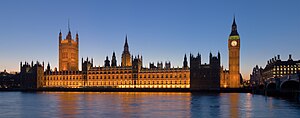 I am sitting in a quiet corner in
Toronto, watching the shenanigans that are shaking up the world’s greatest
democracies. Two weeks ago, I would not have believed it if you told me that
the citadel of the once-great British Empire would be enmeshed in the coils of
a drama the likes of which we haven’t seen in decades, even in political soaps.
It all goes to show how tenuous my hold on historical precedence is. But more
able students of the subject would remind us that the last two hundred years or
so have, in fact, been untypically tranquil and orderly in the way that
government transitions take place in England and the kingdom precariously united
under it. So, really, things are merely reverting to type and the status quo that
used to be during the many centuries that preceded the last two. True, no blood
has stained the floor during the internecine wars that are currently raging along
several corridors of power. Not even fake blood. But, exsanguination of a kind has
occurred, nevertheless. And, most horribly, we see those who wield the
assassin’s knife, becoming themselves impaled by the same instrument they employ
to stab former colleagues. (“Friends” would not be the word to use here). The
backdrop to this internecine war is of course the people’s vote that, narrowly,
instructed the government to get out of Europe. In the end, two women were the
ones who remained standing in the contest to lead the governing Tory party that
had made the mistake of calling the referendum. Then there was one. She,
Theresa May, now has the Tory chalice firmly in her grasp, but she may be well
advised to pause before she takes too full a draught from it.
I am sitting in a quiet corner in
Toronto, watching the shenanigans that are shaking up the world’s greatest
democracies. Two weeks ago, I would not have believed it if you told me that
the citadel of the once-great British Empire would be enmeshed in the coils of
a drama the likes of which we haven’t seen in decades, even in political soaps.
It all goes to show how tenuous my hold on historical precedence is. But more
able students of the subject would remind us that the last two hundred years or
so have, in fact, been untypically tranquil and orderly in the way that
government transitions take place in England and the kingdom precariously united
under it. So, really, things are merely reverting to type and the status quo that
used to be during the many centuries that preceded the last two. True, no blood
has stained the floor during the internecine wars that are currently raging along
several corridors of power. Not even fake blood. But, exsanguination of a kind has
occurred, nevertheless. And, most horribly, we see those who wield the
assassin’s knife, becoming themselves impaled by the same instrument they employ
to stab former colleagues. (“Friends” would not be the word to use here). The
backdrop to this internecine war is of course the people’s vote that, narrowly,
instructed the government to get out of Europe. In the end, two women were the
ones who remained standing in the contest to lead the governing Tory party that
had made the mistake of calling the referendum. Then there was one. She,
Theresa May, now has the Tory chalice firmly in her grasp, but she may be well
advised to pause before she takes too full a draught from it. 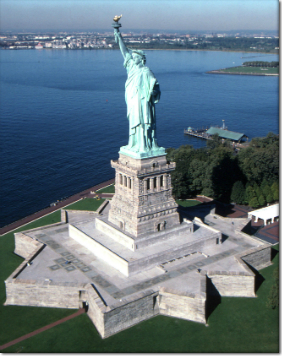 Meanwhile, in that other great democracy, they are enduring
their perennial angst as to how to assign equal value to the life of each of
its citizens. Don’t get me wrong. We are all different. But to say that being
in, or of one group means that you should be consigned to a segment of the
populace in which life, liberty and the pursuit of happiness is denied makes a
mockery of the principles which that great nation espouses. So, for one week in
July we see, in real time, black men going about their legitimate business, being
murdered by police in the streets. In retaliation, a black man murders five white
policemen and wounds seven others before being blown to bits by a robot bomb
deployed by a police force that had run out of answers on a hot night in
Dallas. All of these events occur in the backdrop of a presidential election
campaign in which the most improbable candidate ever, all but bags the
nomination of the Republican Party. Mr Trump, the man I speak of, has shown
himself to be a most divisive individual, saying explicitly what some of his
constituents think but are too embarrassed to utter themselves. The other
candidate for the presidential vote, the presumptive nominee of the Democratic
Party, Hilary Clinton, and the one I hope will win come November, is having to
traverse a minefield of outlandish accusations laid by Trump and those who
support him. True, Trump also irritates his Republican Party no end, but they
must live with him. It’s him they’ve got, for better or worse. But it was they who
encouraged his kind of nonsense in the first place by making it impossible for
Obama to deliver, in the matter of gun control, for example. I cannot wait to
enjoy my moment of schadenfreude when the lot of them lose in November. But
counting chickens before they are hatched is definitely not good husbandry. Ask
David Cameron.
Meanwhile, in that other great democracy, they are enduring
their perennial angst as to how to assign equal value to the life of each of
its citizens. Don’t get me wrong. We are all different. But to say that being
in, or of one group means that you should be consigned to a segment of the
populace in which life, liberty and the pursuit of happiness is denied makes a
mockery of the principles which that great nation espouses. So, for one week in
July we see, in real time, black men going about their legitimate business, being
murdered by police in the streets. In retaliation, a black man murders five white
policemen and wounds seven others before being blown to bits by a robot bomb
deployed by a police force that had run out of answers on a hot night in
Dallas. All of these events occur in the backdrop of a presidential election
campaign in which the most improbable candidate ever, all but bags the
nomination of the Republican Party. Mr Trump, the man I speak of, has shown
himself to be a most divisive individual, saying explicitly what some of his
constituents think but are too embarrassed to utter themselves. The other
candidate for the presidential vote, the presumptive nominee of the Democratic
Party, Hilary Clinton, and the one I hope will win come November, is having to
traverse a minefield of outlandish accusations laid by Trump and those who
support him. True, Trump also irritates his Republican Party no end, but they
must live with him. It’s him they’ve got, for better or worse. But it was they who
encouraged his kind of nonsense in the first place by making it impossible for
Obama to deliver, in the matter of gun control, for example. I cannot wait to
enjoy my moment of schadenfreude when the lot of them lose in November. But
counting chickens before they are hatched is definitely not good husbandry. Ask
David Cameron. 